
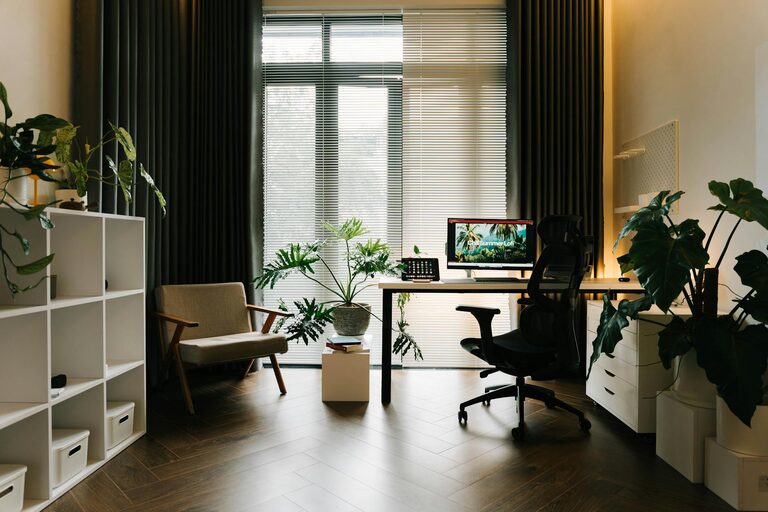
Creating a cozy and functional home office space can make a significant difference in your daily productivity and overall well-being. Whether you’re working remotely full-time or just need a dedicated spot for occasional tasks, designing a space that balances comfort and efficiency is key. This guide provides practical tips to help you set up a home office that feels inviting and supports your work needs.
Choose the Right Location
The first step in building your ideal home office is selecting the right spot. Consider the following when making your choice:
– Natural Light: Try to pick a location with plenty of natural light. Daylight boosts mood and focus, making your workspace more pleasant.
– Quiet Area: Avoid busy or noisy parts of your home. A quiet corner or a separate room can help minimize distractions.
– Space Availability: Ensure you have enough room for essential furniture like a desk, chair, and storage without feeling cramped.
If space is limited, consider multi-purpose spots like a section of the living room or bedroom, but use room dividers or plants to create a sense of separation.
Invest in Comfortable Furniture
Comfort is crucial when spending long hours at your desk. Focus on furniture that supports good posture and ease of use.
– Ergonomic Chair: A chair with adjustable height, lumbar support, and comfortable cushioning can prevent back and neck strain.
– Proper Desk: Choose a desk that fits your work style. If you need a lot of surface space, look for wider desks. Standing desks or adjustable desks offer the option to alternate between sitting and standing.
– Storage Solutions: Shelves, drawers, or filing cabinets help reduce clutter and keep important materials within reach.
Remember, comfort doesn’t have to come at a high price. There are many affordable options that provide good support and durability.
Organize Your Workspace
A tidy and organized workspace promotes focus and efficiency. Here are some methods to keep your desk and office neat:
– Declutter Regularly: Remove unnecessary items and paperwork daily or weekly.
– Use Organizers: Desk trays, drawer dividers, and cable management tools keep things orderly.
– Labeling: Label files and storage bins to quickly find what you need.
– Digital Organization: Keep your computer files and emails organized to avoid digital clutter.
Creating a habit of organizing your workspace can reduce stress and save time during busy workdays.
Personalize Your Office Décor
Adding personal touches makes your home office feel welcoming and inspiring. This can encourage you to spend time there and enjoy your work:
– Colors: Choose soothing or motivating colors depending on your preference. Soft blues and greens can be calming, while yellows and oranges may boost creativity.
– Wall Art: Hang pictures, inspirational quotes, or artwork that uplifts your mood.
– Plants: Indoor plants improve air quality and add a touch of nature, promoting a relaxing atmosphere.
– Lighting: Besides natural light, use warm-toned lamps or adjustable desk lights to create a cozy environment.
Keep decorations simple to avoid visual distraction but make sure your space feels uniquely yours.
Optimize Technology and Connectivity
Your home office should support your technical needs for smooth workflow:
– Reliable Internet: A fast and stable internet connection is essential for video calls and cloud work.
– Essential Accessories: Invest in good-quality peripherals like a keyboard, mouse, headset, and webcam.
– Cable Management: Use clips and ties to keep cables neat and prevent tangling.
– Backup Power: Consider an uninterruptible power supply (UPS) to avoid data loss during outages.
Setting up your technology properly ensures you stay connected and efficient throughout the day.
Create Boundaries to Separate Work and Home Life
One challenge of working from home is maintaining a balance between work and personal time. Setting clear boundaries helps manage this:
– Work Hours: Define your working hours and stick to them to avoid burnout.
– Physical Separation: Close the office door or use a room divider when working to signal “work time.”
– Break Areas: Step away from your workspace during breaks—take a walk or relax in another room.
– Communicate Boundaries: Let family or housemates know your schedule to respect your focus time.
By establishing these boundaries, your home office turns into a dedicated productive zone.
Incorporate Storage and Multi-Use Furniture
If your home office is small, smart furniture choices can maximize functionality:
– Vertical Storage: Use wall shelves or tall bookcases to save floor space.
– Multi-Use Furniture: Desks with built-in storage, foldable desks, or ottomans with storage compartments provide versatility.
– Mobile Furniture: Rolling carts or mobile filing cabinets are easy to move as needed.
Efficient storage solutions keep your workspace neat and adaptable to your changing needs.
Maintain Good Air Quality and Comfort
A healthy environment supports focus and well-being during work hours:
– Ventilation: Open windows regularly to let fresh air circulate.
– Temperature Control: Use fans, heaters, or air conditioning as needed to maintain a comfortable temperature.
– Humidity: Add a humidifier or a few plants if the air feels dry.
Paying attention to your office’s air quality and comfort can help you feel refreshed and alert.
—
By thoughtfully combining comfort, organization, and personalization, your home office can become a space you look forward to working in daily. Remember, designing an ideal workspace is a personal journey, so feel free to adjust these tips to fit your unique preferences and needs. A cozy and functional home office will not only improve your productivity but also enhance your overall work-from-home experience.